
When designing a kitchen or bathroom, homeowners often focus on the big-picture elements: cabinet colors, flooring materials, and appliance selections. However, it’s frequently the smallest details that create the most significant visual impact. Among these overlooked design elements, countertop edge profiles stand out as one of the most transformative yet underappreciated choices you’ll make during your renovation journey.
The edge profile of your countertop might seem like a minor detail, but it serves as the finishing touch that can elevate your entire space from ordinary to extraordinary. Whether you’re working with luxurious quartz, elegant granite, or sophisticated porcelain slabs, the edge treatment you choose will influence not only the aesthetic appeal of your countertops but also their functionality, safety, and long-term durability.
Understanding Countertop Edge Profiles
A countertop edge profile refers to the shape and finish applied to the perimeter of your countertop surface. This seemingly simple detail involves precise fabrication techniques that transform a raw slab into a polished, functional work surface. The edge profile serves multiple purposes: it provides a finished appearance, enhances safety by eliminating sharp corners, and can dramatically alter the perceived style and sophistication of your space.
The choice of edge profile affects how light interacts with your countertop surface, creating shadows and highlights that can make your countertops appear thicker or thinner, more formal or casual, traditional or contemporary. Additionally, different edge profiles offer varying levels of practicality for daily use, with some being easier to clean and maintain than others.
Popular Edge Profile Styles and Their Characteristics

Straight Edge (Eased Edge)
The straight edge, also known as an eased edge, represents the most fundamental and versatile countertop edge profile. This clean, minimalist approach features a slightly rounded corner that eliminates the sharp 90-degree angle while maintaining the countertop’s natural thickness appearance. The subtle rounding, typically measuring about 1/8 inch, provides just enough softening to ensure safety without adding decorative elements.
This edge profile works exceptionally well in contemporary and modern design schemes where clean lines and uncluttered aesthetics take precedence. The straight edge allows the natural beauty of your chosen material to shine without distraction, making it an excellent choice for showcasing dramatic veining in marble or the consistent patterns found in engineered quartz.
From a functional standpoint, straight edges are incredibly practical. They’re easy to clean, with no crevices or decorative elements where dirt and bacteria can accumulate. This makes them particularly suitable for busy kitchens where hygiene and maintenance efficiency are priorities. The simplicity of the straight edge also makes it the most cost-effective option, as it requires minimal fabrication time and expertise.

Beveled Edge
The beveled edge introduces a sophisticated angular element to your countertop design. This profile features a cut made at a 45-degree angle along the top edge, creating a distinctive slanted surface that catches and reflects light beautifully. The bevel can vary in width, typically ranging from 1/4 inch to 1 inch, allowing for customization based on your design preferences and the overall scale of your space.
Beveled edges work particularly well in transitional design schemes that blend traditional and contemporary elements. The angular cut adds visual interest without being overly ornate, making it suitable for both formal and casual settings. In kitchen applications, beveled edges can help create the illusion of a thinner countertop profile, which can be particularly beneficial in smaller spaces where visual weight needs to be minimized.
The reflective quality of beveled edges makes them especially striking when used with materials that have natural luster, such as polished granite or quartz with metallic flecks. The angled surface creates dynamic light play throughout the day as natural and artificial lighting conditions change, adding a subtle but noticeable element of visual interest to your space.
Ogee Edge
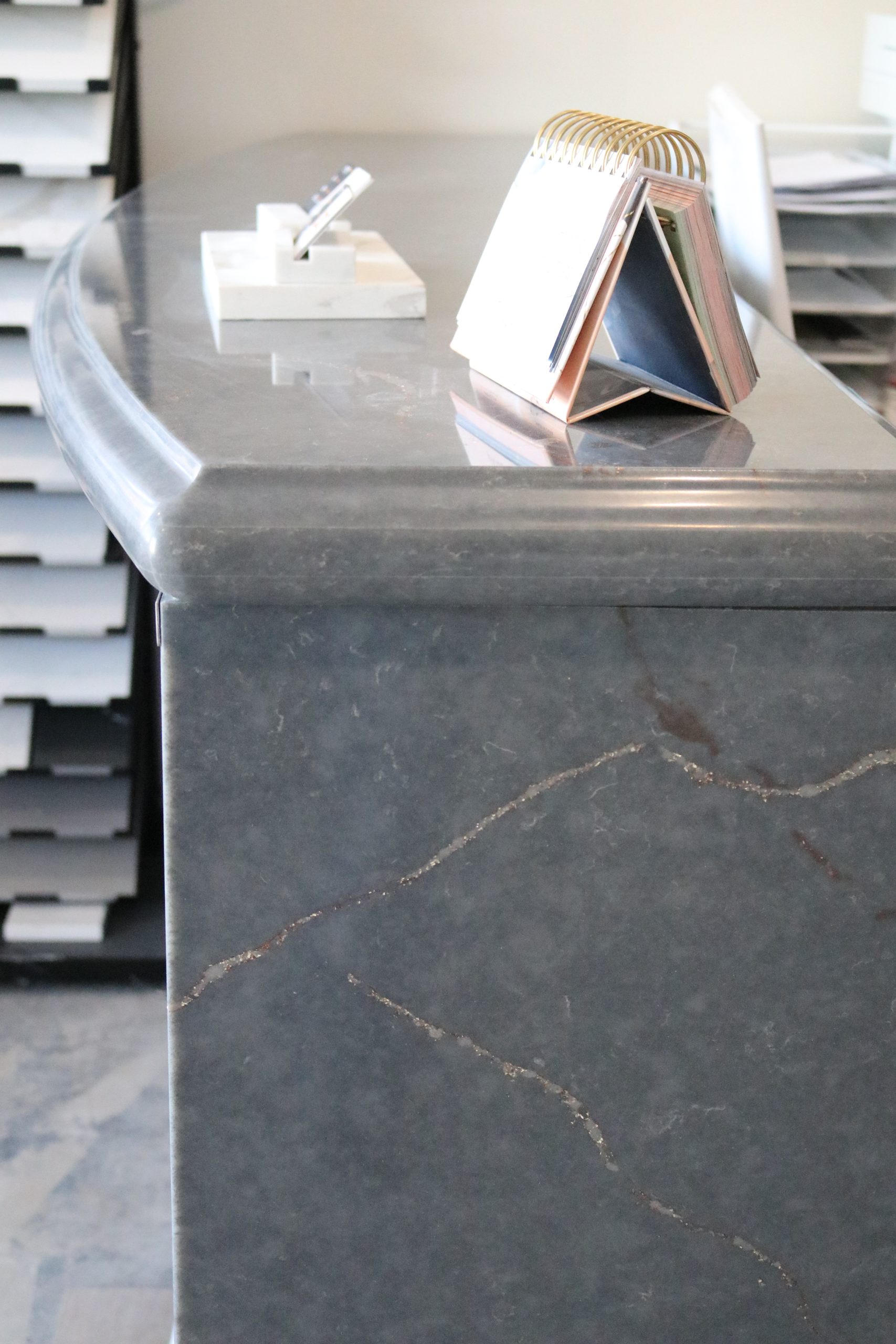
The ogee edge represents one of the most elegant and traditional countertop edge profiles available. This sophisticated option features a distinctive S-shaped curve that creates a flowing, wave-like appearance along the countertop’s perimeter. The ogee profile combines both concave and convex curves, resulting in a graceful undulation that adds significant visual depth and classical appeal to any space.
This edge style draws its inspiration from classical architecture, where ogee moldings have been used for centuries to add refinement and sophistication to interior spaces. When applied to countertops, the ogee edge immediately elevates the perceived value and craftsmanship of the installation, making it a popular choice for luxury kitchens and formal dining areas.
The ogee edge works exceptionally well with traditional and classical design aesthetics, complementing raised-panel cabinetry, ornate hardware, and formal architectural details. However, when executed with precision and paired with the right materials, ogee edges can also work in transitional spaces that blend classical elements with more contemporary features.
From a practical standpoint, ogee edges require more careful maintenance than simpler profiles. The curves and recesses can collect dust and require more detailed cleaning, but many homeowners find the added visual impact worth the extra maintenance effort.
Mitered Edge
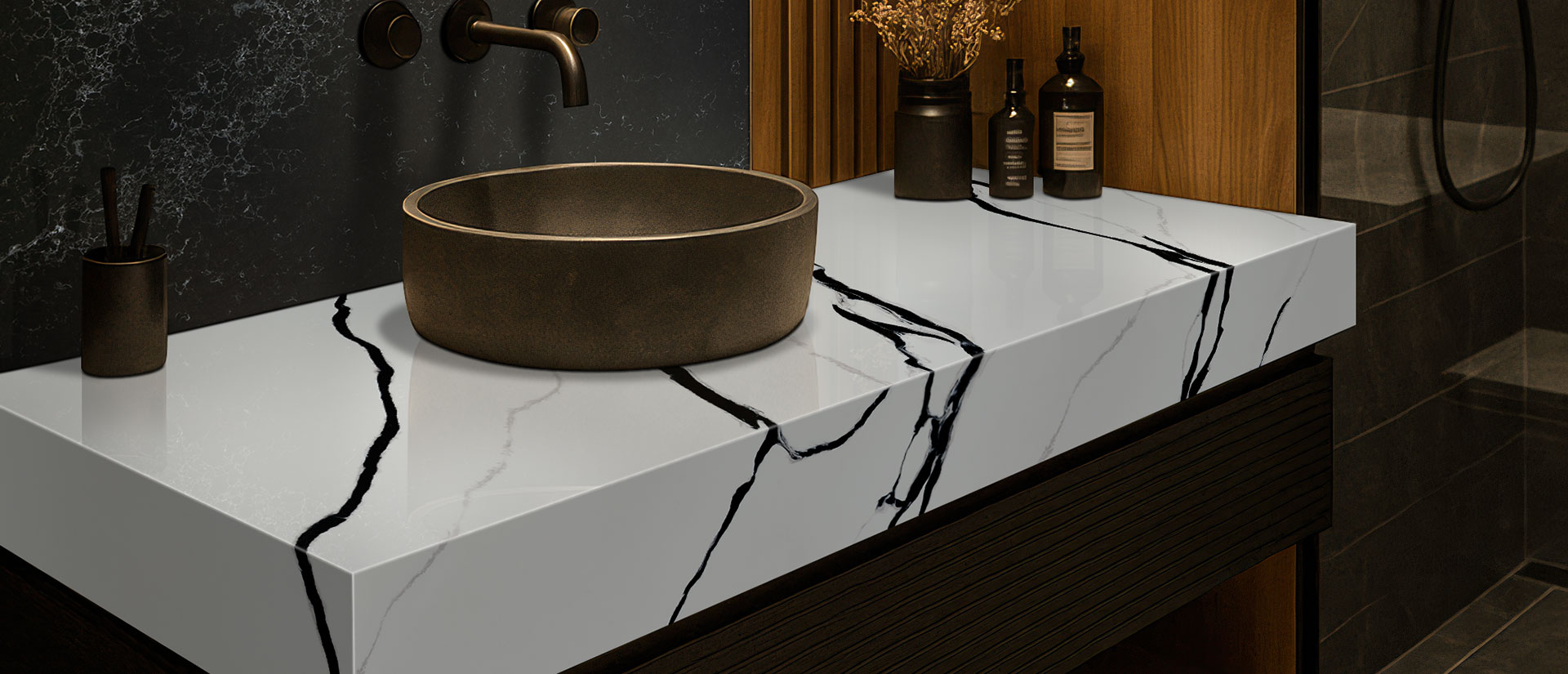
The mitered edge represents the pinnacle of contemporary countertop design, offering a sleek, seamless appearance that creates the illusion of a much thicker slab. This sophisticated edge treatment involves cutting two pieces of material at precise 45-degree angles and joining them together to create a continuous, unbroken surface that wraps around the edge.
The mitered edge technique allows fabricators to create the appearance of a thick, substantial countertop using standard slab thickness. This is particularly valuable when working with expensive materials like natural stone, as it provides the visual impact of a thick slab without the associated material costs. The result is a bold, architectural statement that commands attention and adds significant perceived value to the space.
This edge profile has become increasingly popular in modern and contemporary kitchen designs, where clean lines and geometric precision are highly valued. The mitered edge works exceptionally well with waterfall countertop designs, where the countertop material continues down the side of an island or peninsula, creating a continuous surface that showcases the material’s natural patterns.
The fabrication of mitered edges requires exceptional skill and precision. The two pieces must be cut and joined with perfect accuracy to create a seamless appearance. Any imperfections in the cutting or joining process will be immediately visible, making this edge profile one of the most technically challenging to execute properly.

Bullnose Edge
The bullnose edge offers a completely rounded profile that creates a soft, pillow-like appearance along the countertop’s perimeter. This edge style features a full 180-degree curve that eliminates all sharp angles and corners, creating the safest possible edge treatment for households with young children or elderly family members.
Available in various radii, from tight curves that closely follow the countertop thickness to larger, more dramatic curves that extend beyond the original edge, bullnose profiles can be customized to suit different design preferences and functional requirements. The full bullnose creates a completely rounded edge, while a half bullnose maintains a flat bottom surface with a rounded top.
This edge profile works particularly well in casual, family-friendly environments where safety and comfort are primary concerns. The soft curves complement farmhouse, cottage, and casual contemporary design styles, adding a welcoming, approachable feel to the space. Bullnose edges are also excellent choices for bathroom vanities, where the rounded profile reduces the risk of injury in tight spaces.
The smooth, continuous surface of bullnose edges makes them relatively easy to clean and maintain. However, the curved profile can make it slightly more challenging to achieve a perfect seal when installing undermount sinks, requiring skilled fabrication and installation techniques.

Dupont Edge
The Dupont edge, also known as a double eased edge, features two distinct levels or steps along the countertop’s perimeter. This sophisticated profile creates visual depth and architectural interest while maintaining the clean, contemporary appeal that makes it suitable for modern design schemes.
The stepped profile of the Dupont edge creates interesting shadow lines that change throughout the day as lighting conditions shift. This dynamic quality adds visual interest without requiring ornate decorative elements, making it an excellent choice for spaces that need subtle sophistication without overwhelming decorative details.
This edge profile works particularly well with solid-colored materials like engineered quartz, where the stepped profile creates visual interest without competing with natural stone patterns or veining. The Dupont edge is also an excellent choice for thick countertop installations, where the stepped profile helps break up what might otherwise appear as an overly heavy or bulky edge.
Matching Edge Profiles to Design Aesthetics
Modern and Contemporary Spaces
Modern and contemporary design aesthetics prioritize clean lines, geometric precision, and uncluttered visual appeal. In these spaces, countertop edge profiles should complement rather than compete with the overall design philosophy. Straight edges and mitered edges are the most appropriate choices for truly modern spaces, as they maintain the clean, linear aesthetic that defines contemporary design.
The straight edge works particularly well in minimalist kitchens where every element serves a functional purpose without unnecessary ornamentation. The subtle rounding provides safety and comfort while maintaining the crisp, architectural quality that modern design demands. When working with materials that feature dramatic veining or patterns, the straight edge allows these natural characteristics to take center stage without distraction.
Mitered edges represent the ultimate expression of contemporary sophistication, creating bold, architectural statements that align perfectly with modern design principles. The precision required to execute mitered edges properly reflects the attention to detail and craftsmanship that contemporary design values. These edges work exceptionally well in open-concept spaces where the kitchen serves as a focal point and architectural statement.
Traditional and Classical Designs
Traditional design aesthetics embrace ornate details, classical proportions, and time-tested decorative elements. In these spaces, countertop edge profiles should reflect the same attention to decorative detail and classical inspiration that defines the overall design approach.
Ogee edges are the natural choice for traditional kitchens, as their flowing curves and classical inspiration complement raised-panel cabinetry, ornate hardware, and formal architectural details. The sophisticated S-curve of the ogee edge adds the level of refinement and craftsmanship that traditional design demands, creating a sense of timeless elegance that will remain appealing for decades.
Beveled edges can also work well in traditional spaces, particularly when the bevel is wider and more pronounced. The angular cut adds visual interest while maintaining enough sophistication to complement traditional design elements. When paired with natural stone materials like granite or marble, beveled edges help showcase the material’s natural beauty while adding architectural detail.
Transitional Spaces
Transitional design represents the perfect balance between traditional and contemporary elements, creating spaces that feel both timeless and current. This design approach requires countertop edge profiles that can bridge the gap between classical and modern aesthetics without favoring either extreme.
Beveled edges are particularly well-suited to transitional spaces, as they provide visual interest and sophistication without being overly ornate or stark. The angular cut adds contemporary appeal while maintaining enough classical reference to work with traditional elements. The versatility of beveled edges makes them an excellent choice for homeowners who want to update their spaces without committing to a purely contemporary or traditional aesthetic.
Dupont edges can also work well in transitional spaces, particularly when the stepped profile is subtle and refined. The architectural quality of the Dupont edge provides contemporary appeal while the added detail and visual depth complement more traditional elements in the space.
Farmhouse and Rustic Styles
Farmhouse and rustic design aesthetics emphasize comfort, practicality, and welcoming appeal. These spaces benefit from countertop edge profiles that feel approachable and family-friendly while maintaining the durability and functionality that active households require.
Bullnose edges are the perfect choice for farmhouse kitchens, as their soft, rounded profiles create a welcoming, comfortable feel that aligns perfectly with farmhouse design principles. The safety benefits of rounded edges make them particularly appropriate for family-focused spaces where children and elderly family members spend significant time.
Straight edges can also work well in farmhouse settings, particularly when the overall design emphasizes simplicity and functionality over decorative details. The clean, practical appeal of straight edges complements the honest, unpretentious nature of farmhouse design while providing the durability and easy maintenance that busy family kitchens require.
Functional Considerations Beyond Aesthetics
Safety and Comfort
The safety implications of different edge profiles cannot be overlooked, particularly in households with young children, elderly family members, or individuals with mobility challenges. Sharp corners and edges can pose significant injury risks, making the choice of edge profile an important safety consideration.
Bullnose edges provide the highest level of safety, with their completely rounded profiles eliminating all sharp corners and edges. This makes them the ideal choice for family kitchens where safety is a primary concern. The soft curves also provide greater comfort when leaning against countertops during food preparation or casual conversation.
Straight edges with proper easing provide a good balance between safety and aesthetic appeal. The slight rounding eliminates dangerous sharp corners while maintaining the clean lines that many design styles require. Even minimal easing can significantly reduce injury risk while preserving the desired aesthetic qualities.
Maintenance and Cleaning
Different edge profiles require varying levels of maintenance and cleaning attention. Simple profiles like straight edges are the easiest to maintain, with smooth surfaces that can be quickly wiped clean without special attention to decorative details or crevices.
More complex profiles like ogee edges require more detailed cleaning, as dust and debris can accumulate in the curves and recesses. However, many homeowners find that the added visual impact of decorative edge profiles justifies the additional maintenance requirements.
Mitered edges, while visually striking, require careful maintenance to preserve their seamless appearance. Any damage to the joint between the two pieces can be difficult and expensive to repair, making proper care and maintenance essential for preserving their appearance over time.
Durability and Longevity
The durability of different edge profiles varies based on their complexity and the stress points they create in the material. Simple profiles like straight edges distribute stress evenly across the material, reducing the likelihood of chips or cracks developing over time.
More complex profiles with sharp angles or thin sections may be more susceptible to damage, particularly in high-traffic areas or when subjected to impact. However, proper fabrication techniques and quality materials can minimize these risks, ensuring that even decorative edge profiles provide years of reliable service.
Material Considerations for Edge Profiles
Natural Stone
Natural stone materials like granite and marble offer excellent versatility for edge profile fabrication. The density and hardness of these materials allow for precise cutting and shaping, making them suitable for even the most complex edge profiles. However, the natural characteristics of stone, including potential weak points along grain lines or natural fissures, must be considered when selecting edge profiles.
Granite’s exceptional hardness makes it ideal for sharp, precise edge profiles like beveled or mitered edges. The material’s durability ensures that these edges will maintain their appearance over time, even with regular use. Marble, while softer than granite, can still accommodate most edge profiles, though extra care may be required during fabrication and installation.
Engineered Quartz
Engineered quartz offers exceptional consistency and predictability for edge profile fabrication. The manufactured nature of these materials eliminates the natural variations found in stone, allowing for precise, uniform edge treatments across the entire installation.
The non-porous nature of engineered quartz makes it particularly suitable for complex edge profiles that might be difficult to seal properly in natural stone. The consistent density and composition of quartz also make it ideal for mitered edges, where perfect joints are essential for achieving the desired seamless appearance.
Porcelain Slabs
Large-format porcelain slabs represent the newest option in countertop materials, offering exceptional durability and design flexibility. The thin profile of many porcelain slabs makes mitered edges particularly attractive, as they can create the appearance of substantial thickness while maintaining the material’s inherent advantages.
The precision manufacturing of porcelain slabs allows for extremely accurate edge fabrication, making them suitable for even the most demanding edge profiles. However, the hardness of porcelain requires specialized cutting and fabrication equipment, making professional installation essential.
Professional Fabrication and Installation
The quality of edge profile fabrication and installation significantly impacts both the appearance and longevity of your countertops. Professional fabricators possess the specialized equipment, technical expertise, and experience necessary to execute even the most complex edge profiles with precision and consistency.
Proper edge fabrication requires diamond-tipped cutting tools, precision measuring equipment, and extensive experience working with different materials. The tolerances required for seamless mitered edges or perfectly curved bullnose profiles demand professional-grade equipment and expertise that cannot be replicated with standard tools or amateur techniques.
Professional installation ensures that edge profiles are properly supported and sealed, preventing future problems with structural integrity or water infiltration. The investment in professional fabrication and installation pays dividends in terms of appearance, durability, and long-term satisfaction with your countertop investment.
Cost Considerations and Value
The cost of different edge profiles varies significantly based on their complexity and the fabrication time required. Simple profiles like straight edges require minimal additional fabrication time and represent the most cost-effective option. More complex profiles like ogee or mitered edges require additional time, expertise, and sometimes additional material, resulting in higher costs.
However, the investment in premium edge profiles often provides excellent value in terms of visual impact and perceived quality. A well-executed decorative edge profile can dramatically enhance the appearance of your countertops and overall space, often providing more visual impact per dollar invested than other upgrade options.
When evaluating edge profile costs, consider the long-term value and satisfaction they provide. A slightly more expensive edge profile that perfectly complements your design aesthetic and lifestyle needs will provide years of enjoyment and may contribute to higher resale value if you decide to sell your home.
Visit Design Miter Tile's Showroom!
The selection of countertop edge profiles represents one of the most impactful yet often overlooked decisions in kitchen and bathroom design. From the clean simplicity of straight edges to the architectural drama of mitered profiles, each option offers unique benefits and aesthetic qualities that can transform your space.
The key to selecting the perfect edge profile lies in understanding how different options align with your design aesthetic, functional needs, and lifestyle requirements. Whether you’re drawn to the classical elegance of ogee edges, the contemporary sophistication of mitered profiles, or the family-friendly appeal of bullnose edges, the right choice will enhance both the beauty and functionality of your space for years to come.
Remember that the quality of fabrication and installation is just as important as the edge profile selection itself. Professional expertise ensures that your chosen edge profile is executed with the precision and attention to detail necessary to achieve the desired visual impact and long-term durability.
Ready to transform your space with custom countertop fabrication and expert installation? Contact Design Miter Tile today to explore our extensive selection of quartz and porcelain slabs and discover how our in-house custom fabrication services can bring your vision to life. Our experienced team will help you select the perfect edge profile to complement your design aesthetic and lifestyle needs, ensuring a result that exceeds your expectations. Visit our Campbell showroom or reach out to schedule your consultation and take the first step toward your dream kitchen or bathroom.
Frequently Asked Questions about Countertop Edge Profiles
How do I choose the right edge profile for my kitchen style?
Consider your overall design aesthetic first. Modern and contemporary kitchens work best with straight or mitered edges, while traditional spaces benefit from ogee or beveled profiles. Transitional designs can accommodate beveled or Dupont edges. Also factor in your lifestyle needs – families with young children might prioritize the safety of bullnose edges, while formal entertaining spaces might call for more decorative options like ogee profiles.
Are decorative edge profiles more difficult to maintain than simple ones?
Yes, more complex edge profiles generally require additional maintenance attention. Simple straight edges are the easiest to clean and maintain, while decorative profiles like ogee edges have curves and recesses where dust and debris can accumulate. However, with regular cleaning and proper care, decorative edge profiles can maintain their appearance for many years. The visual impact often justifies the minimal additional maintenance required.
Can any edge profile be used with any countertop material?
While most edge profiles can be fabricated in various materials, some combinations work better than others. Natural stone like granite handles sharp, precise edges well due to its hardness. Engineered quartz offers excellent consistency for complex profiles. Porcelain slabs work particularly well with mitered edges due to their thin profile. Your fabricator can advise on the best edge profiles for your chosen material based on its specific characteristics and properties.
How much does the edge profile choice affect the overall cost of my countertops?
Edge profile complexity directly impacts fabrication costs. Straight edges are the most economical option, while decorative profiles like ogee or mitered edges require additional fabrication time and expertise, increasing costs by 10-30% depending on the complexity. Mitered edges may also require additional material. However, the visual impact and perceived value often justify the additional investment, especially in high-end installations.
Can I change my countertop edge profile after installation?
Changing edge profiles after installation is generally not practical or cost-effective. The process would require removing the countertops, re-fabricating the edges, and reinstalling them, which often costs nearly as much as a complete replacement. It’s essential to carefully consider your edge profile choice during the initial design phase. This is why working with experienced professionals who can help you visualize different options is so valuable in making the right decision from the start.